
What Waiting Until January Actually Costs You
Skip garage door prep this fall and the bill usually shows up on the coldest morning of the year, right when you're already running late. A spring that's been quietly losing tension all summer can snap the first time temperatures drop fast overnight. Weatherstripping that cracked back in August keeps letting cold, damp air pour into the garage all winter, which can mean a frozen pipe on the other side of that shared wall. None of this is dramatic until it is, and by then you're paying for an emergency call instead of an hour of maintenance.
Why Birmingham Winters Are Harder on Garage Doors Than They Look
Birmingham doesn't get brutal winters, but that's part of the problem — homeowners don't think about winter prep the way folks in colder states do, so small issues go unnoticed. What this area does get is big temperature swings, sometimes 40 degrees or more between a mild afternoon and an overnight cold snap. Metal hardware expands and contracts with those swings, which loosens bolts, stiffens lubricant, and puts extra stress on springs that are already worn. Add in the humidity that never really leaves North Alabama, and you get condensation forming on cold metal tracks and panels overnight — the same moisture cycle that causes rust and swelling you'd expect from a rainy season, just triggered by cold instead of a downpour.
Check Weatherstripping and Seals First
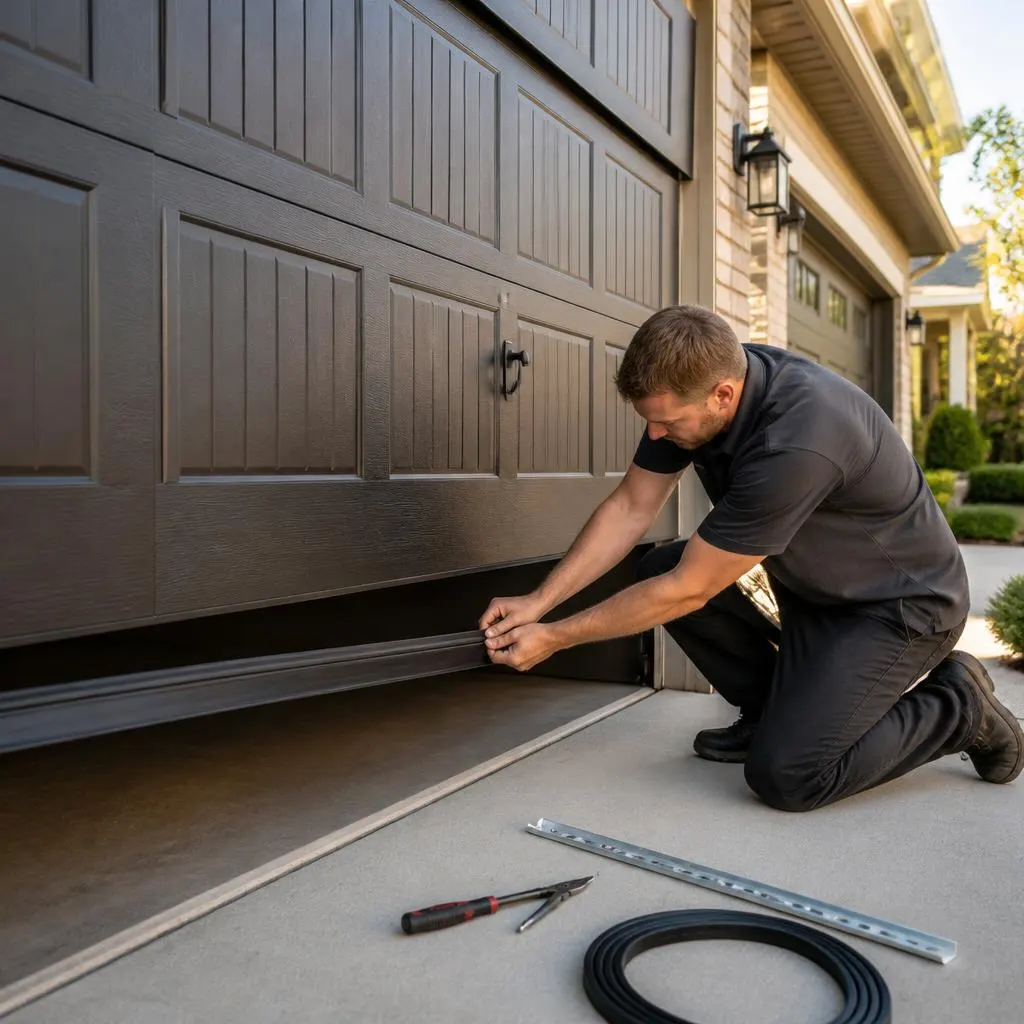
The bottom seal and side weatherstripping are your garage's first line of defense against both cold drafts and the moisture that causes rust underneath. Over a hot, humid summer, rubber seals can dry out, crack, or pull away from the track. Walk around the closed door during daylight and look for gaps of light. If you can see daylight, cold air and rain are both getting through. Replacing a bottom seal is inexpensive and takes less than an hour, and it's one of the highest-value fixes you can make before winter — it keeps the garage warmer, drier, and less likely to develop rust along the bottom panel edge.
What to Inspect
- Bottom seal for cracking, flattening, or gaps where it meets the floor
- Side and top weatherstripping for stiffness or separation from the frame
- Panel joints on steel doors for early rust spotting, especially near the bottom
- Threshold seals if your door has one, since these take the most wear from blown rain
Springs and Hardware Need Attention Before the Cold, Not After
Torsion and extension springs lose tension gradually through thousands of open-and-close cycles, and cold weather makes brittle metal more likely to fail suddenly rather than gradually. If your door has felt heavier than usual, closes with a noticeable thud, or the opener strains more than it used to, the spring is likely near the end of its life. Springs typically last 7-10 years or roughly 10,000 cycles, and replacing one before it breaks is far safer and cheaper than dealing with a snapped spring — these store a lot of tension and should always be handled by someone trained to do it safely.
While you're at it, check all the hardware: tighten loose bolts on the track and hinges, and lubricate rollers, hinges, and the torsion spring itself with a garage-door-specific lubricant, not household oil, which can attract grit and gum up in cold weather. Cold makes old grease stiffen, which forces the opener motor to work harder and shortens its life.
Don't Ignore the Opener and Sensors
Garage door openers rely on safety sensors mounted low on each side of the track, and these can get knocked out of alignment by seasonal humidity swelling wooden door frames or by routine bumps from bikes and lawn equipment. Test them by waving a broom handle under the closing door — it should stop and reverse immediately. If it doesn't, the sensors need realignment before winter, not after a close call. If your opener has a battery backup, check it now; backup batteries lose capacity faster in cold weather and in Birmingham's storm season, power outages are common enough that a dead backup battery leaves you stuck.
A Quick Pre-Winter Walkthrough
- Open and close the door manually (disconnect the opener first) to feel for resistance, grinding, or uneven movement
- Look for rust spots on tracks, hinges, and panel bottoms and treat them before they spread
- Confirm the auto-reverse safety feature works on both the sensor test and a physical resistance test
- Clear leaves and debris from the track and weep holes so water has somewhere to go during fall and winter rain
- Listen for new squeaks or grinding noises, which usually mean a roller or hinge needs lubrication or replacement
When to Call Birmingham Overhead Door Co
If your spring looks worn, your door feels unusually heavy, or your sensors won't stay aligned no matter how many times you adjust them, it's time to call in a technician rather than troubleshoot further. Birmingham Overhead Door Co handles spring replacement and garage door opener repair across the Birmingham area, and a technician can spot early rust or hardware wear during a routine visit that's easy to miss from the driveway. Our preventive maintenance service covers the full walkthrough above — lubrication, hardware tightening, seal inspection, and a balance test — so the door is ready before the first real cold snap instead of failing during one.
If you're in Birmingham, Hoover, Vestavia Hills, Homewood, Mountain Brook, Bessemer, Fairfield, or Hueytown and haven't had your garage door checked since spring, now's the time. Call Birmingham Overhead Door Co to schedule a winter maintenance visit before the weather turns.