
What Another Season of Ignoring This Actually Costs
Skip a pre-storm inspection and the bill doesn't show up as a line item until it's too late to avoid. A garage door that buckles under wind pressure doesn't just need a repair — it can let wind into the garage, which pushes up on the roof from the inside and turns a wind event into a roof-and-wall problem. Add a flooded garage from a door that no longer seals at the bottom, a car damaged by debris, or tools and equipment ruined by water, and a $150–$400 repair you kept putting off turns into thousands in structural and content damage. The fix almost always costs less in September than it does after the first bad storm of the season.
Why the Garage Door Is the Weakest Wall in the House
Every other exterior wall on a typical home is a solid, continuous structure. The garage door is the one exception — a large panel of thin metal or composite material, hung on tracks, held up by springs and rollers instead of studs and framing. It's also usually the biggest single opening in the house. When straight-line winds or a hurricane remnant pushes against that panel, there's nothing behind it but air. If the door fails — panels buckle, it blows inward, or it pulls off the tracks — the sudden pressure change inside the garage can lift the roof or blow out windows elsewhere in the house. This is why wind-load-rated doors and reinforcement exist: not for the door's sake, but for the rest of the structure.
Signs Your Door Won't Hold Under Pressure
- Visible rust at the bottom panel or hinges — humidity and afternoon downpours accelerate corrosion, and rusted metal fails faster under stress.
- Panels that flex or bow when you push on them by hand — a healthy door should feel rigid.
- Gaps along the bottom seal — wind-driven rain gets in, and so does wind pressure.
- Track bolts that are loose or tracks slightly bent — even a small gap lets the door walk off its rails under load.
- An opener that struggles or reverses unexpectedly — often an early sign of spring or cable wear that will matter a lot more in high wind.
A Pre-Storm Checklist That Actually Matters
- Check the weatherstripping. Swollen or cracked seals from humidity let water and wind in. Replacing it is inexpensive and takes less than an hour.
- Inspect springs and cables. A door under wind load puts extra strain on springs that are already worn. If you see a visible gap in a torsion spring coil or frayed cable strands, that's a failure waiting to happen — and torsion springs are under enough tension that replacement should never be a DIY job.
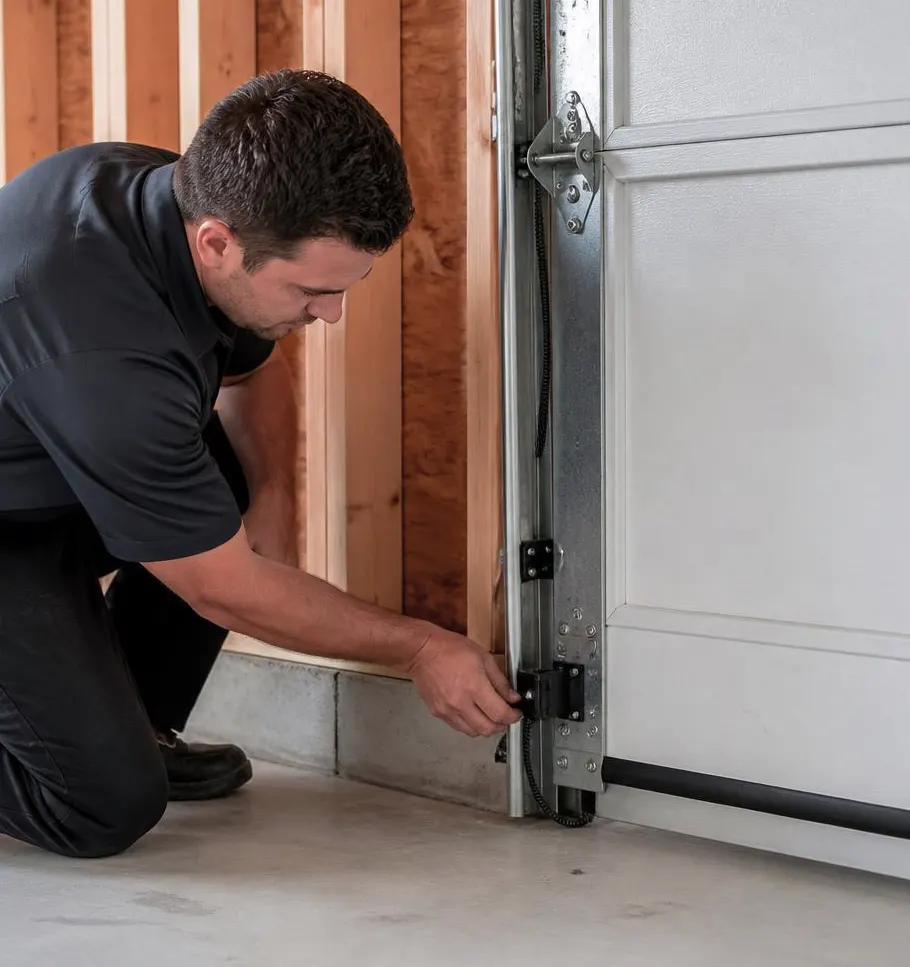
- Tighten hardware. Roller brackets, hinges, and track bolts loosen over time from normal cycling and seasonal humidity swings. A few minutes with a socket wrench now prevents a track failure during a storm.
- Test the auto-reverse safety feature. Place a piece of wood on the ground where the door closes — it should reverse on contact. This matters for storm prep too, since a door that doesn't sense resistance properly is a door with sensor or alignment issues that wind will expose.
- Consider a horizontal bracing kit if your door isn't already wind-load rated. These kits add steel reinforcement across the back of the door panels and are far cheaper than replacing a door that fails.
Wind-Rated Doors and Bracing: What's Worth the Upgrade
If your current door is older or was never rated for wind pressure, there are two paths. The lower-cost option is a retrofit bracing kit, which adds horizontal steel struts to an existing door and can meaningfully increase its resistance to buckling. The more thorough option is replacing the door entirely with a wind-load-rated model built for exactly this kind of weather, with reinforced tracks and heavier-gauge panels. Replacement costs more upfront — national ranges for a wind-rated residential door typically run higher than a standard door — but it's a one-time cost versus repeated repairs after every bad storm season.
Don't Forget the Opener
A battery backup for your garage door opener isn't just a convenience during power outages — it's what lets you close the door manually or electronically if a storm knocks out power mid-event. Doors left open, even partway, during high wind are far more likely to suffer structural damage.
When to Call Birmingham Overhead Door Co
If your inspection turns up rust that's gone past the surface, a spring with visible wear, or a door that flexes more than it should, that's the point to call in a technician rather than keep testing it yourself. Our Preventive Maintenance service covers the full inspection — springs, cables, tracks, rollers, weatherstripping, and opener function — and catches the small issues before a storm turns them into big ones. If a spring is already compromised, our Spring Replacement service handles it safely with the right tension equipment, which isn't something to attempt with a DIY kit. For homes with an older door that isn't built for local wind conditions, we can also walk you through bracing or replacement options that fit your house and budget.
Birmingham's storm season doesn't wait for a convenient time, and neither should your garage door inspection. If you're anywhere in Birmingham, Hoover, Vestavia Hills, Homewood, Mountain Brook, Bessemer, Fairfield, or Hueytown, call Birmingham Overhead Door Co today to get your door checked and ready before the next system rolls through.